US sets 213% preliminary anti-dumping rate on China’s PTMEG, a spandex input
The preliminary rate applies to all Chinese exporters, because none won its own rate. South Korea, Taiwan and Vietnam got between 7.46% and 49.79%. Cash deposits have been collected since November 10.
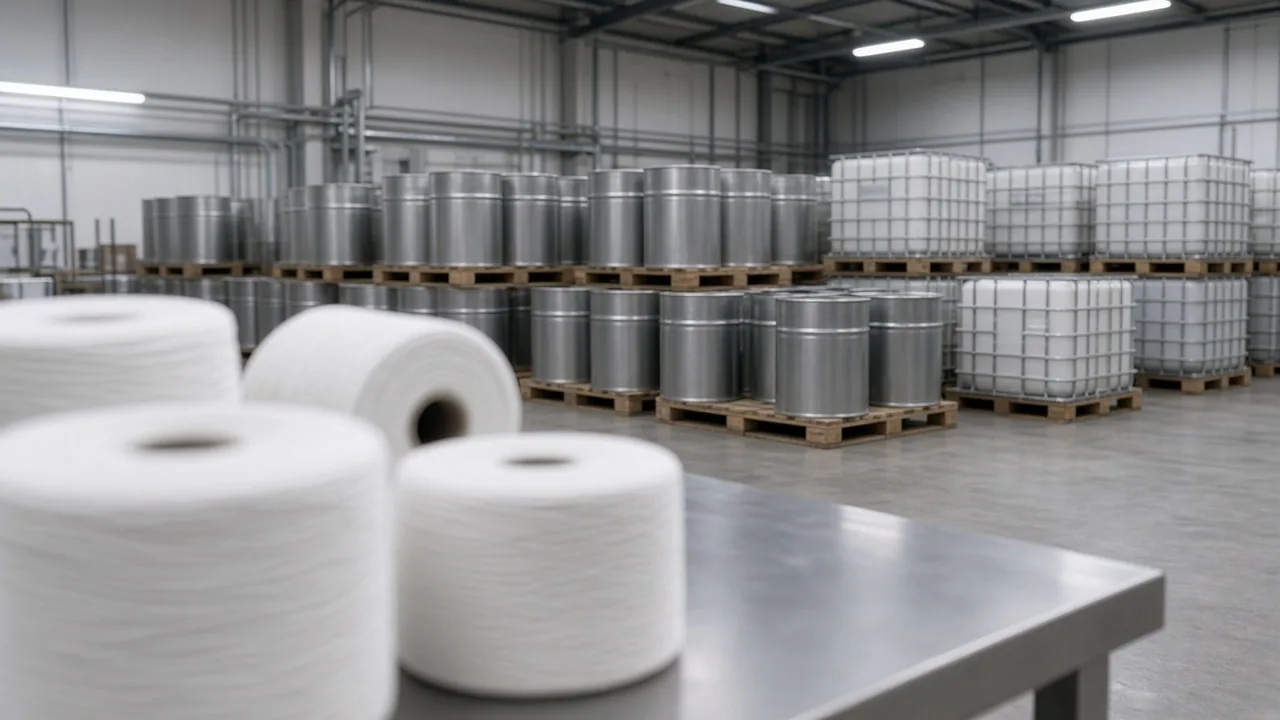
The US Commerce Department has set a preliminary dumping margin of 213.44% on polytetramethylene ether glycol (PTMEG) imported from China, an input used to make spandex (elastane) and elastic polyurethanes. The determination, signed on November 4, announced on November 6 and published in the Federal Register on November 10, applies to the whole “China-wide entity”, meaning every Chinese producer and exporter.
The rate is so high because no Chinese exporter qualified for its own rate. In that case, Commerce applied facts available with adverse inferences (AFA) and relied only on the petition. As a result, there are no calculations to disclose and no company verification. The period of investigation runs from October 1, 2025, to March 31, 2026.
Since November 10, US Customs and Border Protection (CBP) has suspended liquidation of imports and collected a cash deposit equal to the margin. When the exporter is in a third country but the PTMEG was produced in China, the entry carries the same rate as the Chinese supplier. The scope covers product with up to 2% stabilisers or additives, as well as PTMEG diluted, blended or re-stabilised in a third country. It enters the US under subheading 3907.29.0000 and may also enter under 2932.11.0000 and 3404.91.5150.
China is one of four targets in the case, brought by BASF Corporation, which identified itself as the only PTMEG producer in the US. In the parallel investigations, preliminary rates were 25.32% for Korea PTG and 49.79% for BASF Company Ltd. in South Korea (the latter based on AFA), 7.46% for Dairen Chemical and 26.42% for Formosa Asahi Spandex in Taiwan (the latter also on AFA), and 36.55% for Hyosung Dong Nai in Vietnam. The rate for all other exporters was 25.32% in South Korea, 7.46% in Taiwan and 36.55% in Vietnam.
According to import statistics cited by Commerce when the case opened, the US bought 26.98 million kg of PTMEG from China in 2025 ($35.19 million), against 39.80 million kg in 2024, a 32% drop by volume. South Korea is the largest supplier: 82.25 million kg in 2025 ($152.84 million). The figures cover the tariff subheading, which may include out-of-scope products. In the petition, the alleged margin for China ranged from 174.95% to 339.69%, depending on the country used as the cost benchmark: Brazil, Malaysia or Mexico.
The case is not over. The US International Trade Commission (USITC) found in May, at the preliminary stage, a reasonable indication of material injury to the US industry; the final injury ruling comes after the final dumping determination. For China, that final determination is due on January 18, 2027. For South Korea, Taiwan and Vietnam, the deadline was postponed at exporters’ request and the decision is expected around March 29, 2027. Parties have 14 days to file written arguments and 30 days to request a hearing.
The US is not the only side using trade remedies on chemicals: China itself has been investigating EU para-aramid filament since November.
CSP take: for buyers sourcing PTMEG for US plants, Chinese product stops being an option while the 213.44% deposit applies, and long-term contracts should say who pays if the rate changes in the final determination. For plants in other countries that use Chinese PTMEG and sell to the US, it makes sense to document the input’s origin now. On our reading of the scope, the rate applies to PTMEG, including blends, but not to products in which it has already reacted chemically, such as spandex yarn; outside the US, the decision changes no tariff. This reading is ours, not the Commerce Department’s.
Original sources
- U.S. Department of Commerce (ITA), Federal Register: affirmative preliminary dumping determination on PTMEG from China (case A-570-227), 10/11/2026
- ITA, fact sheet on the preliminary PTMEG determinations for China, South Korea, Taiwan and Vietnam (rates and next steps), 06/11/2026
- ITA, fact sheet on the opening of the PTMEG investigations (petitioner, alleged margins and import statistics), 30/04/2026
- Federal Register: opening of the anti-dumping investigations on PTMEG from China, South Korea, Taiwan and Vietnam, 05/05/2026
- U.S. International Trade Commission (USITC), Federal Register: preliminary injury determination on PTMEG (Inv. 731-TA-1782-1785), 16/07/2026
CSP take marks the newsroom's interpretation; everything else comes from the cited sources.
Read next



More in Chemicals
Sourcing Briefing
What changed in China sourcing, in your inbox every weekday.