EU acrylate duties hit US and Saudi suppliers harder than Chinese ones
Provisional anti-dumping duties on butyl acrylate and 2-ethylhexyl acrylate apply from November 12: 22.3% to 29% for Chinese producers, 32.4% for South Africa, 39% for the US and 40.3% for Saudi Arabia. EU imports from China fell 43% between 2022 and 2025.
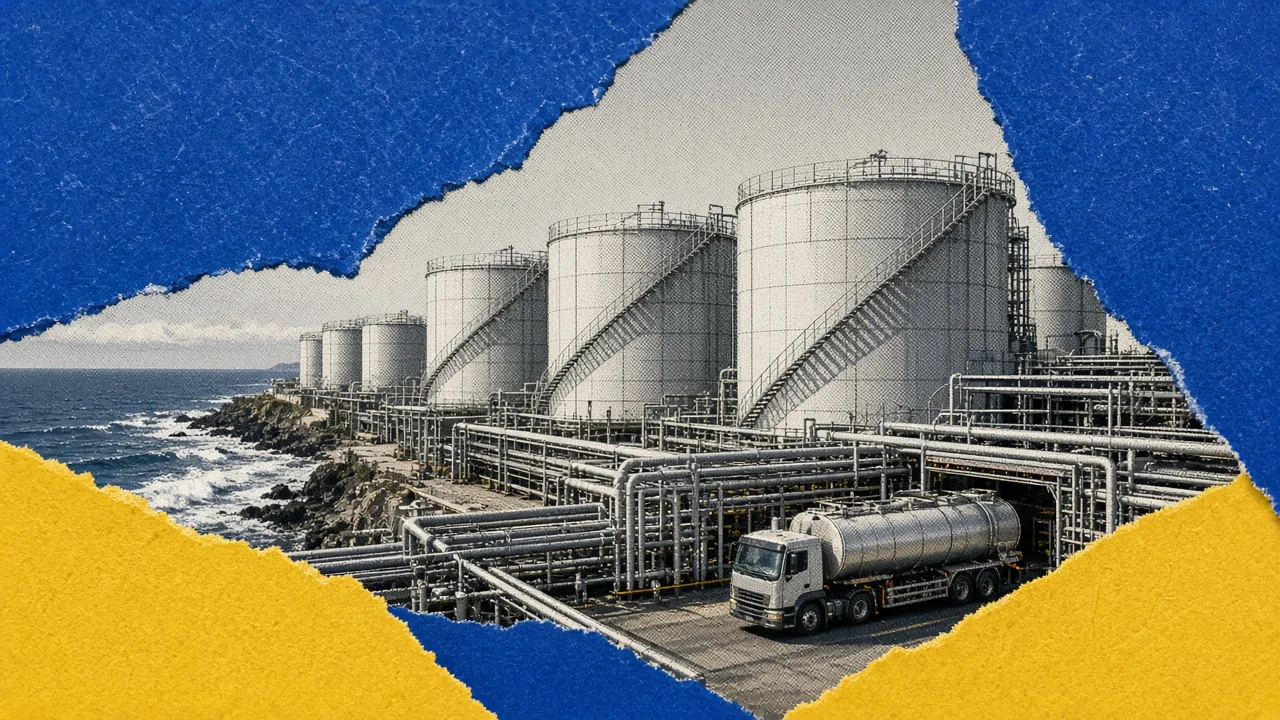
What did the EU decide? The European Commission imposed provisional anti-dumping duties on butyl acrylate and 2-ethylhexyl acrylate (CN code ex 2916 12 00) from China, Saudi Arabia, South Africa and the United States. Implementing Regulation (EU) 2026/2512 was published on November 11 and applies from November 12. In China, Shanghai Huayi New Material pays 29%, Pinghu Petro Chemical 22.3%, the two other cooperating producers, Wanhua-PIC Petrochemicals and Jiangsu Sandie Chemical, 23.9%, and all other Chinese imports 29%. All imports from Saudi Arabia pay 40.3%, South Africa 32.4% and the United States 39%, including Dow Chemical. Goods clear customs only against a security deposit equal to the duty. Polymers made from the esters go into coatings, adhesives and sealants, paper, polymer additives, textiles and inks, the regulation says.
See also: Brazil keeps anti-dumping duty of up to US$ 1,267.74/t on Chinese titanium dioxide
Why do Chinese producers pay less? Because their dumping margins were lower. The EU charges the lower of the dumping margin and the injury margin. For Chinese producers, dumping margins of 22.3% to 29% were below injury margins of 37.4% to 41.4%, so the duty equals the dumping margin. Dow’s dumping margin was 61.9% but its duty stops at the 39% injury margin, and South Africa’s 83.1% stops at 32.4%. For China, the Commission built normal value with Indonesian benchmarks. Brazil, which it had provisionally picked as the benchmark country when the case opened, was dropped because it imported only 40 tonnes of propylene in the period, 90% of it from China, and half of its acrylic acid from China.
Was China the biggest problem? Not by volume. EU imports from China fell from 51,994 tonnes in 2022 to 29,772 tonnes in 2025, while those from Saudi Arabia rose from 6,638 to 15,089 tonnes. The four countries held 30% of the EU free market in both 2022 and 2025, while total EU consumption fell from 622,883 to 562,010 tonnes. The average Chinese import price fell from €2,649 to €1,549 a tonne and the Saudi one from €2,089 to €1,147. The Commission found that imports from the four countries undercut EU prices by 14.5% on average, and Chinese imports by 10% to 15%. Profitability of the sampled EU producers fell from 12% to -13%.
What changes for buyers? A higher bill now, and possibly a back-dated one. Five of seven users that answered the questionnaire said the esters were no more than 3% to 15% of their production costs; for the two most exposed, the share was 20% to 30%. All but one reported profit margins of 3% to 36%. The Commission rejected arguments from Organik Kimya Netherlands and Gantrade that other suppliers could not replace these volumes, and a Greek association of downstream users opposed the duties. Imports had been registered since May, and customs must keep data on goods that entered up to 90 days before the provisional duty, so a definitive duty could reach back if legal conditions are met. The EU used the same registration tool on Chinese polyether polyols this month. Interested parties have 15 calendar days from November 12 to comment.
CSP view: for European buyers this is a four-origin case in which China gets the lowest rates. The bigger test is for US and Saudi exporters, whose duties sit near 40%. Acrylates priced out of Europe may be offered elsewhere, including in Brazil and the rest of Latin America, though we have seen no evidence of that yet. MOFCOM did not address these duties at its regular press conference on November 12, according to the transcript it posted that day; China runs its own chemical cases against the EU, such as the separate probe into ENB from the EU and Japan opened on November 6. This reading is ours, not the Commission’s.
Original sources
- European Commission: Implementing Regulation (EU) 2026/2512 imposing provisional anti-dumping duties on certain acrylic esters from China, Saudi Arabia, South Africa and the US (Official Journal of the EU), 11/11/2026
- European Commission: Implementing Regulation (EU) 2026/1085 making imports of certain acrylic esters subject to registration (Official Journal of the EU), 21/05/2026
- Hong Kong Trade and Industry Department (TID): Commercial Information Circular No. 987/2026 on the EU provisional anti-dumping duty on certain acrylic esters, 11/11/2026
- Austrian Economic Chamber (WKO): Antidumping: bestimmte Acrylester (timeline and proposed rates), 2026
- China Ministry of Commerce (MOFCOM): regular press conference transcript, 12/11/2026
CSP take marks the newsroom's interpretation; everything else comes from the cited sources.
How to cite: China Sourcing Post (chinasourcingpost.com), “EU acrylate duties hit US and Saudi suppliers harder than Chinese ones”, 2026-11-12. https://chinasourcingpost.com/en/news/eu-acrylate-anti-dumping-duties-china-us-saudi-arabia/
Read next
More in Chemicals
Sourcing Briefing
What changed in China sourcing, in your inbox every weekday.