China and Thailand sign a new durian protocol and open the door to salacca
The two phytosanitary protocols with GACC extend pest controls from the orchard to the packing house. Thailand shipped 1.22 million tonnes of fresh durian to China in January–September alone.
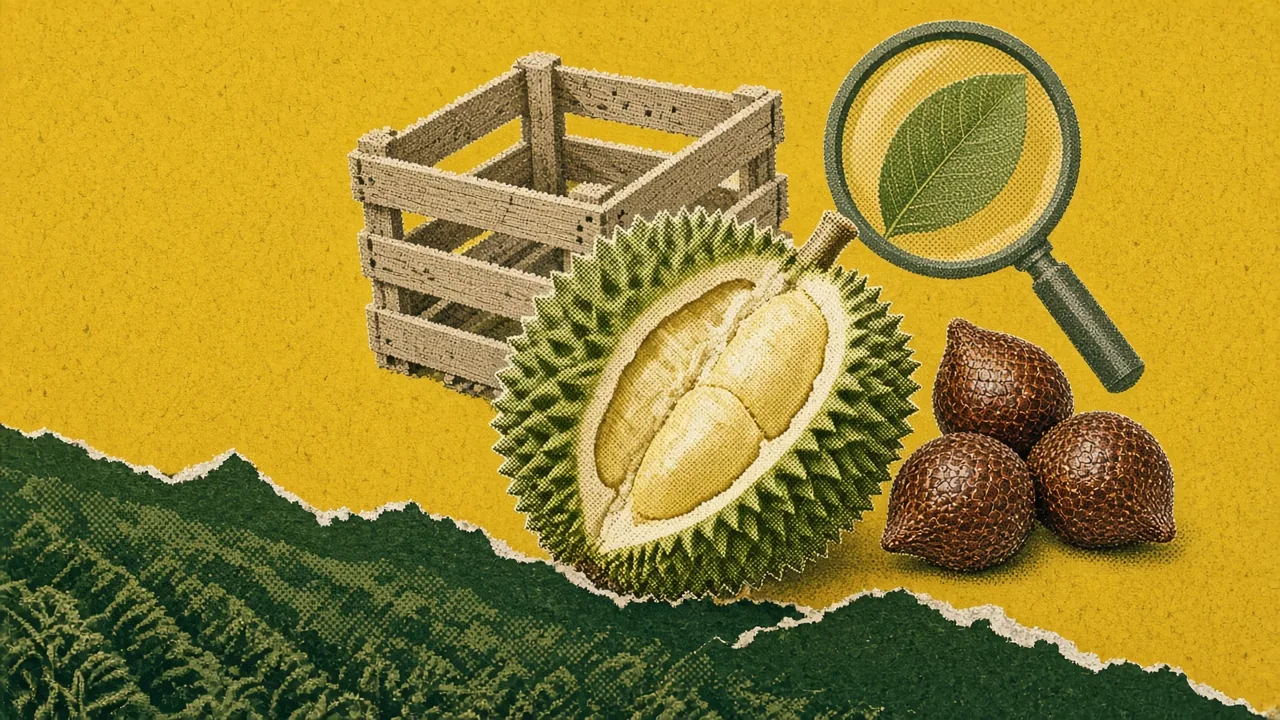
Thailand and China signed two phytosanitary protocols on 13 November 2026, during Chinese Premier Li Qiang’s official visit to Bangkok, between Thailand’s Ministry of Agriculture and Cooperatives and the General Administration of Customs of China (GACC): a new protocol for fresh durian and another that opens the Chinese market to fresh salacca (snake fruit), according to Thai Prime Minister’s Office spokesperson Ekapop Phearnphiset, as reported by MGR Online. Both were among eight documents whose signing Li and Thai Prime Minister Anutin Charnvirakul witnessed at Government House in Bangkok. The Thai Cabinet approved the texts on 10 November and said GACC had asked to sign them during the 13–15 November visit, the first official visit by a Chinese premier in seven years.
Quarantine-pest control now runs from the orchard to the packing house. According to the Cabinet summary reported by The Nation and Thai Data, orchards must follow Good Agricultural Practice (GAP) and integrated pest management, packing houses must meet GMP standards, the chain must be traceable and every lot needs a phytosanitary certificate. The text replaces the old tropical-fruit quarantine and inspection protocol and, the Thai government says, should speed up clearance and reduce the risk of import suspensions. Durian is Thailand’s top-earning crop in China: 1,217,695 tonnes worth THB 139.878 billion in January–September 2026.
Not in practice yet: the protocol opens the market, but there is no public effective date, and GACC usually publishes import requirements and a list of registered orchards and packing houses before the first shipments (CSP analysis). Salacca, a fruit with scaly skin, had no access to the Chinese market. Thailand grows about 32,000 tonnes a year on average, harvested all year with peaks in May–June and August–September; the government estimates at least THB 76 million (about US$2.26 million, according to the government’s public relations department) in extra exports a year. The salacca phytosanitary certificate will need an additional declaration that the lot complies with the protocol and is free of the quarantine pests China is concerned about.
The eight documents signed the same day also include the framework document for the Belt and Road import and export food safety cooperation mechanism, which GACC set up in 2023 and which had 19 member countries according to the Cabinet summary, and a memorandum between Thailand’s Ministry of Industry and China’s MIIT on electric and smart vehicles, battery production and recycling, and the automotive supply chain. The list is completed by memoranda on the Global Security Initiative, metrology and vocational education, plus an exchange of notes on consulate staffing. Neither the Cabinet summary nor the signing announcement includes the protocol texts, an effective date or the pest list.
CSP take: China imported 2.04 million tonnes of fresh durian in January–September, as our CIIE coverage showed; Thailand’s 1.22 million tonnes equal about 60% of that volume, on a CSP calculation that combines Thai export and Chinese import data. China keeps diversifying its imported-fruit supply, from South-East Asia to the Americas, and the new Ezhou freighter route opened with Chilean cherries. For buyers of Thai durian, the change shifts risk to the packing house: check your supplier’s registration on the GACC list before the next harvest. For Brazilian exporters seeking approvals in China, the required path is the same, and China’s October imports show its buying appetite is still strong. This is CSP’s reading, not the governments’.
Original sources
- [object Object]
- [object Object]
- [object Object]
- [object Object]
- [object Object]
- [object Object]
- [object Object]
CSP take marks the newsroom's interpretation; everything else comes from the cited sources.
How to cite: China Sourcing Post (chinasourcingpost.com), “China and Thailand sign a new durian protocol and open the door to salacca”, 2026-11-13. https://chinasourcingpost.com/en/news/china-thailand-new-durian-protocol-opens-market-salacca/
Read next
 Agrifood
Joy Wing Mau debuts Malaysian white durian at CIIE as China's fresh durian imports pass 2 million tonnes
 Agrifood
Guangzhou and Hong Kong customs open air corridor for imported fruit
 Trade policy
China publishes a light-industry standards upgrade plan, with targets for 2027 and 2030
More in Agrifood
Sourcing Briefing
What changed in China sourcing, in your inbox every weekday.