China formalises suspension of rare earth and lithium battery export controls until 10 January 2027
The 9 November notice writes into the legal text the 10 January date agreed with the US for the Kuala Lumpur arrangement. The previous suspension was due to end on 10 November; the new pause runs two months.
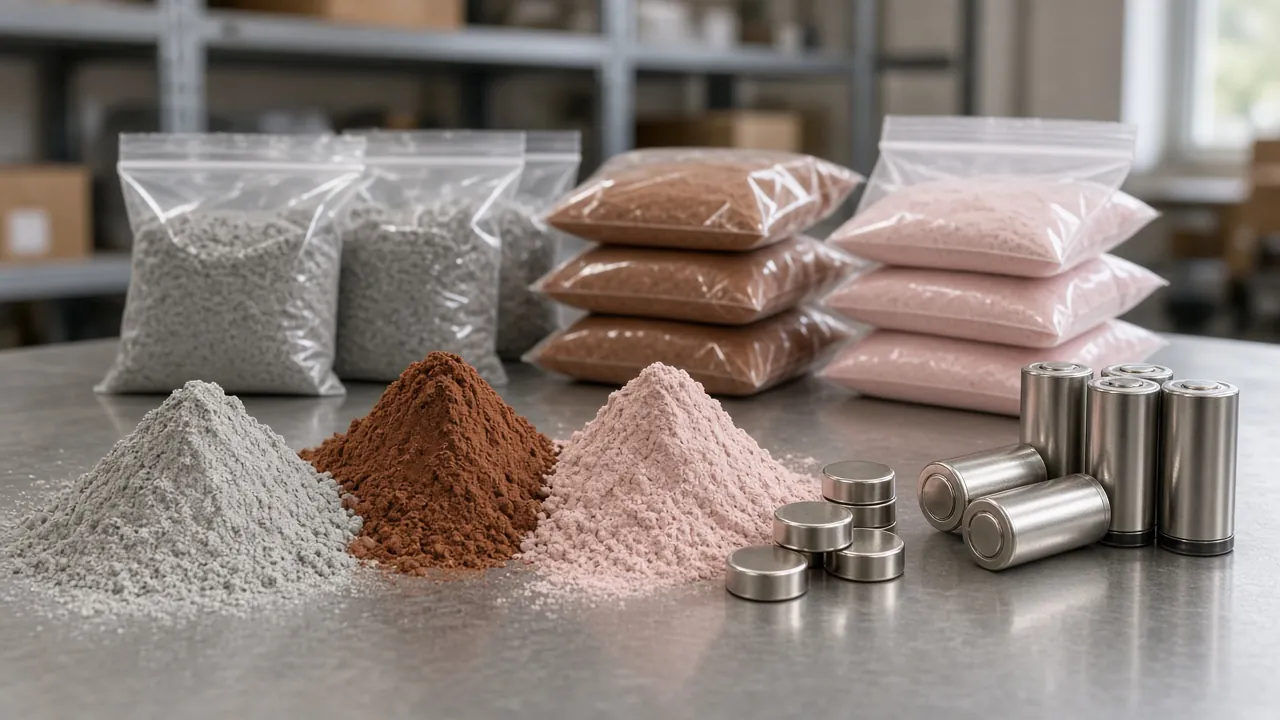
China's Ministry of Commerce (商务部) and General Administration of Customs (海关总署) published Announcement No. 58 of 2026, dated 9 November. The one-sentence text says that, with approval, MOFCOM and Customs Announcements Nos. 55, 56, 57 and 58 of 2025 and MOFCOM Announcements Nos. 61 and 62 of 2025 remain suspended from 11 November 2026 to 10 January 2027.
Those six acts were issued on 9 October 2025 and widened China's export controls to superhard materials, equipment and inputs for rare earth production, five medium and heavy rare earths, lithium batteries and artificial graphite anode materials, rare earth items made outside China, and rare earth technologies. On 7 November 2025, Announcement No. 70 of 2025 suspended all of them until 10 November 2026. The new text takes effect the next day, 11 November, leaving no gap.
On 28 September, the head of MOFCOM's Department of American and Oceanian Affairs said China and the US had agreed to extend to 10 January 2027 the Kuala Lumpur arrangement, under which both sides had suspended some tariff and non-tariff measures until 10 November 2026. That statement did not mention export controls, and the Chinese legal text still named 10 November as the end date. The 9 November notice applies the same 10 January date to these controls.
On the same day a MOFCOM spokesperson said that, to implement the consensus of the eighth round of China-US economic and trade consultations, China keeps suspended for two more months from 10 November the measures of Announcement No. 21 of 2025, which put 16 US entities on the export control list and banned dual-use exports to them. Exporters wishing to sell to those entities must apply to MOFCOM for a licence, which will be granted where the rules are met. For the same period, measures against 11 US entities on the unreliable entity list (Announcement No. 7 of 2025 of the list's working mechanism) stay suspended, and MOFCOM Order No. 4 of 2026 keeps suspended the countermeasures against five US subsidiaries of South Korea's Hanwha Ocean.
Announcement No. 58 does not cover the April 2025 control on seven medium and heavy rare earths (Announcement No. 18 of 2025), which is not among the suspended acts, nor Announcement No. 72 of 2025, which suspended until 27 November 2026 the in-principle ban on exporting dual-use gallium, germanium, antimony and superhard-material items to the US. As of publication, MOFCOM had not released a new act on that second date.
CSP analysis: for buyers in any country, the practical effect is that orders for magnets, batteries or graphite anode from China keep following the pre-October 2025 rules until 10 January 2027. It is worth checking with the supplier whether the item already needs a licence under another act still in force, such as the April 2025 one, and avoiding promising customers delivery dates after January without a clause covering the rules coming back. This analysis is ours, not the Chinese government's.
Original sources
- Ministério do Comércio (MOFCOM) e Alfândega da China: 商务部、海关总署公告2026年第58号, 09/11/2026
- MOFCOM e Alfândega: 商务部、海关总署公告2025年第70号 (suspensão até 10/11/2026), 07/11/2025
- China News Service (中新社) via 欧洲时报: 商务部美大司负责人解读第八轮中美经贸磋商成果, 28/09/2026
- MOFCOM: porta-voz sobre a lista de controle de exportação (出口管制管控名单), 09/11/2026
- MOFCOM: porta-voz sobre a lista de entidades não confiáveis (不可靠实体清单), 09/11/2026
- MOFCOM: 商务部令二〇二六年第4号 (subsidiárias americanas da Hanwha Ocean), 09/11/2026
- MOFCOM e Alfândega: 商务部、海关总署公告2025年第18号 (sete terras raras médias e pesadas), 04/04/2025
- MOFCOM: 商务部公告2025年第72号 (gálio, germânio, antimônio e materiais superduros para os EUA, suspensão até 27/11/2026), 09/11/2025
CSP take marks the newsroom's interpretation; everything else comes from the cited sources.
Read next
 Pharma
Pentagon drops WuXi AppTec from its ‘Chinese military companies’ list, but leaves the door open
 Trade policy
China keeps special port fee on US-linked ships suspended until 10 January 2027
 Trade policy
China extends suspension of 24% tariff on US goods by two months and keeps the 10%
Sourcing Briefing
What changed in China sourcing, in your inbox every weekday.